 Year:
Year: 2026
Builder: Martin
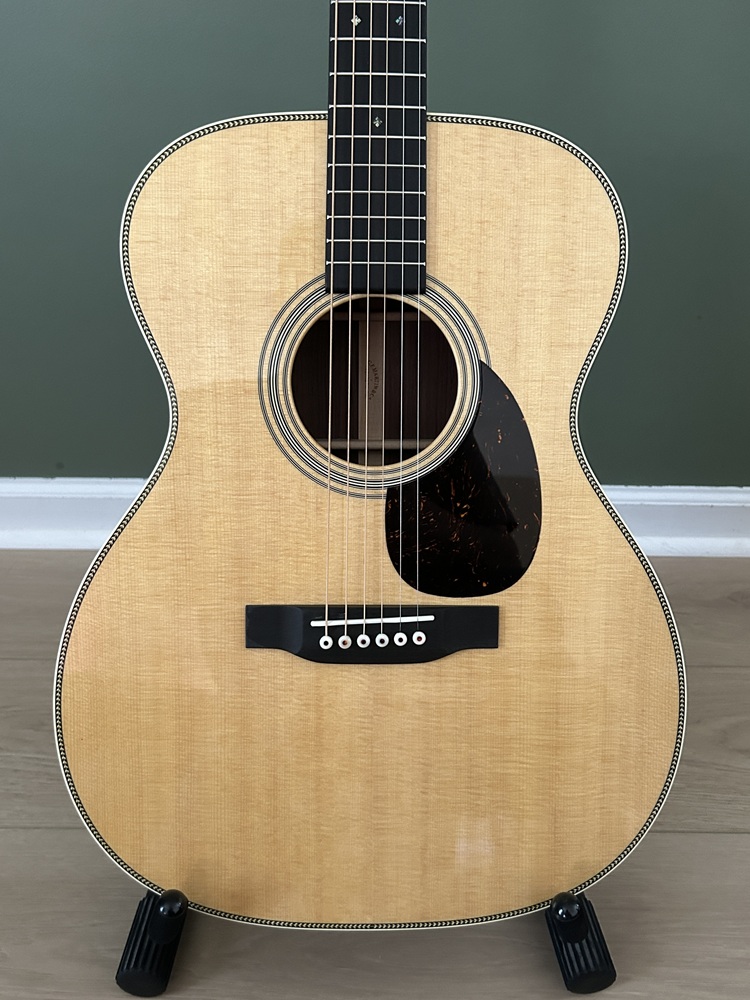
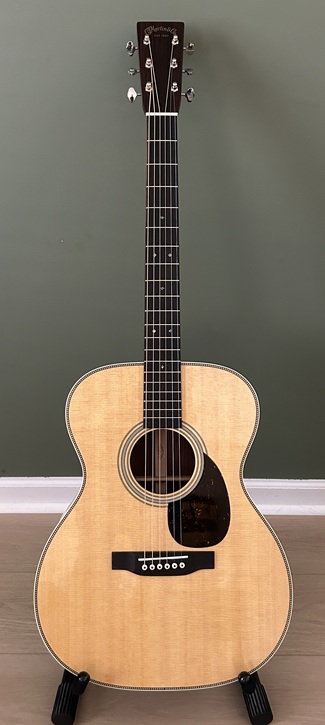
Model: OM-28
Serial Number: 3065666
Top: Spruce
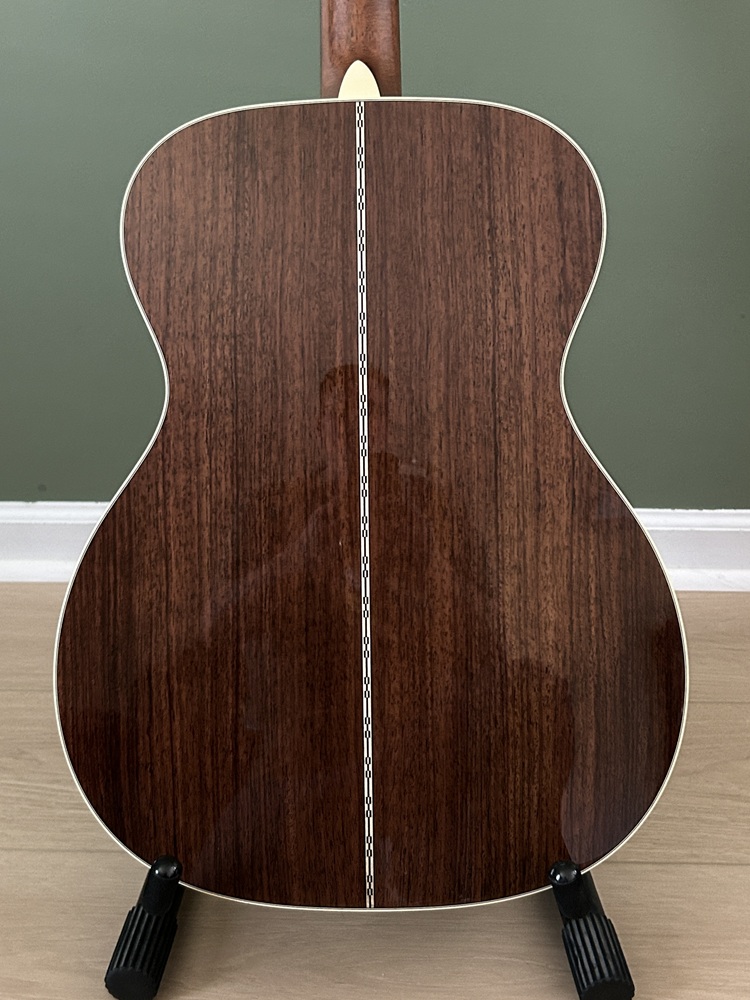
Body: East Indian Rosewood
Body Finish: Gloss
Body Size/Shape: 000-14 Fret
Body Width at Upper Bout: 11.25"
Body Width at Waist: 9.45"
Body Width at Lower Bout: 15"
Body Depth at Neck Joint: 3.35"
Body Depth at Tail Block: 4.125"
Body Binding: Antique White
Body Purfling: Bold Herringbone
Cutaway: None
Rosette: Style 28 Multi-Stripe
Pickguard: Faux Tortoise OM
Bridge: Ebony GE Modern Belly
Bridge Pins: Bone w/ Faux Tortoise Dots
Saddle: Compensated Bone
String Spacing at Saddle: 2.15625"
Neck: Mahogany
Neck Finish: Satin
Neck Profile: GE Modified Low Oval
Neck Joint: Dovetail
Heelcap: Antique White
Scale Length: 25.4"
Fretboard: Ebony
Fretboard Binding: None
Fretboard Inlay: Abalone Diamonds and Squares
Frets: 20
Frets to Body: 14
Fretboard Radius: 16"
Nut: Bone
Nut Width: 1.75"
Headstock: Solid Square Taper and Diamond
Headplate: East Indian Rosewood
Headplate Logo: Script Old Style Overlay
Tuners: Open Gear Nickel
Tuner Buttons: Butterbean
Tuner Ratio: 18:1
Case: Martin Molded Hardshell Case
Pickup: None
Strings: D'Addario XS Jim Tozier Signature PB (.013-.056)
Since the story behind my
other OM-28 already covers the reasons I chose it, I figured I'd use this space to explain why I decided to own two identical guitars.
It's probably fair to say that most
normal guitar players would prefer to own two different guitars instead of owning two that were exactly the same. And I think for most situations, choosing two different-sounding instruments to cover a wider range of sonic territory is the more appealing option.
My situation, on the other hand, is a bit unique. Because I play almost everything in either DADGAD or CGCGCD tunings (or slight variations of them), I can either spend a lot of time switching back and forth between the tunings on any given guitar, or I can choose to own two guitars and leave each of them in a dedicated tuning. Since I prefer the latter option, it makes sense to choose two guitars that feel and sound as close to each other as possible, since ideally I'd like the tuning to be the only difference when switching between the guitars.
I'll admit that there's a certain degree of
laziness masquerading as convenience or consistency with this line of thinking, since I really dislike having to constantly switch between tunings. But there are also some very legitimate reasons why my two-guitar approach is a better solution. The first of these is the longevity of the strings. Constantly moving between tunings stretches the strings and causes them to wear out faster and lose their tone quicker than If they're left in stable tunings.
Changing tunings frequently also puts additional stress on the neck of the guitar as it moves back and forth as a result of increasing or decreasing the amount of tension the strings are exerting on it. A guitar set up for a specific tuning, on the other hand, will have better tuning stability and better intonation since the neck is more stable. Plus, when a guitar is dedicated to a particular tuning, you can customize the individual string gauges you're using to compensate for the decreased (or sometimes increased) tension so that they don't feel too loose or overly stiff.
Now, if I used a multitude of tunings this approach would be far less practical (or at least far more
expensive)... but since I really only two primary tunings, it works for me. As a result, I've usually owned two of the same (or at least extremely similar) guitars throughout my career as a fingerstyle player. In the case of the Martin OM-28s, I went with two identical guitars... but with the Avalons, I chose two guitars that were the same in every respect except for the tonewood used on the back and sides.